
What is wood veneer

For many people, wood veneer is regarded as a mysterious material that has been heard of, but basically not known precisely what it is other than just being wood. But few people know that this technology goes all the way back to ancient Egypt, as many as 4,000 years ago. The tombs of the pharaohs were decorated with various veneer essences, which were quite scarce in that area. For this reason, logs imported from Syria and Phoenicia were skillfully sheared through special saws used by two carpenters. The log was “cut” horizontally and the main driving force was the arms of the men. This was a very exhausting and time-consuming process.
Today, technology has evolved a great deal, and thanks to advanced techniques, sheets of wood of various thicknesses can be sheared while making the most of the plant’s yield. The process is quite simple though specialized. There are two main types of techniques, but the most widely used is essentially softening the log in giant vats at high temperatures, which varies depending on the “recipe” that the veneer mill uses, and then “slicing” it horizontally so as to obtain so-called sheets. That’s how you get veneer, sliced or veneer wood.
In the woodworking world, these sheets are applied to raw MDF or plywood panels to add a touch of beauty to the furniture or wall. They also serve a vital purpose when working on built-in furniture or any kind of object that has a mechanism. The reason is that solid wood primarily, but also panels of various kinds, contract and expand due to temperatures and the environment itself. That is why applying one sheet of veneer on the main facade and another (which can also be of a less expensive essence) creates this opposing force as the two sheets “pull” toward their side thus stabilizing the furniture. In addition to having an aesthetic and stabilizing action, veneers also have other advantages. By transforming the floor plan into many thin layers, the negative impact on the environment is greatly lowered, and in some cases they can even be cost-effective. If you want to design walls in a room with fine wood such as Teak or Mahogany, you don’t need to spend who knows how much money. Just create plywood panel structures and then use the fine veneers you want as the facade.
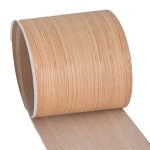 Wood veneer


