
Usage tips and applications
To begin with, here are some useful tips that apply to all types of wood veneers
Wood veneer is an elegant and refined material that is ideal for interior applications due to its superior quality.
The optimal temperature for processing varies between 10 and 30°C, with an ideal condition between 15 and 25°C.
Relative humidity should be kept between 40% and 60%, and rooms with excessive dust are strongly discouraged.
For effective bonding, it is crucial to prepare a clean, dust-free and degreased surface.
Supports and Bonding Methods for Wood Veneer
- Solid wood: Prefer vinyl or polyurethane glue.
- Plywood: Vinyl glue, PU, neoprene, epoxy recommended.
- MDF (Medium): Use of vinyl, PU, neoprene, epoxy glues; avoid self-adhesives in the presence of dust.
- Chipboard Panels: Suitable vinyl glue, PU, neoprene, epoxy resin.
- Melamine panels: PU glue, neoprene.
- Metal: Sand, dust and degrease before using neoprene or epoxy glue.
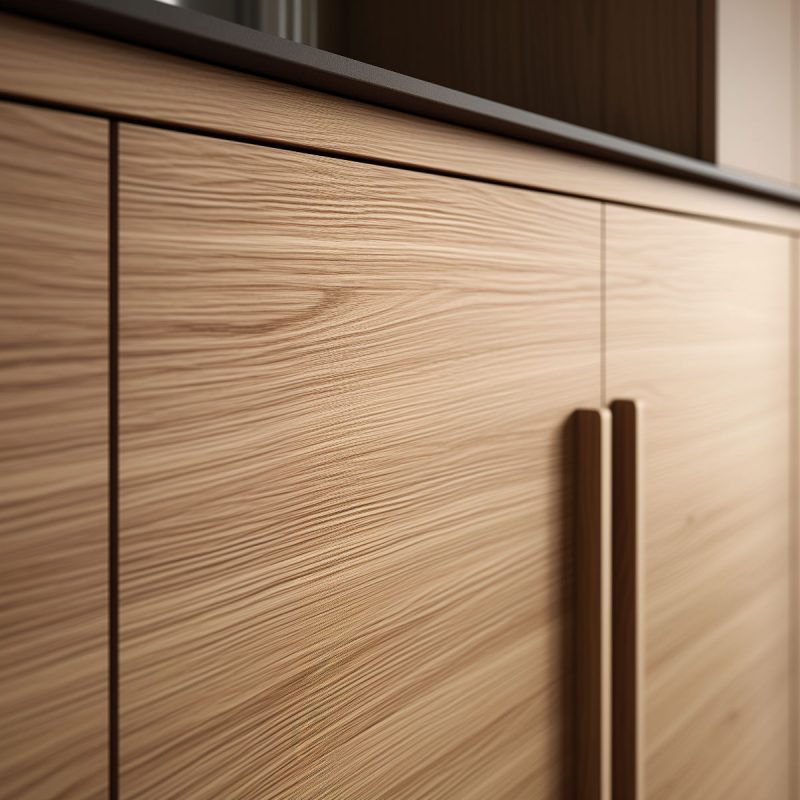
It is essential to counterbalance a wood veneer panel with a veneer of the same thickness on the opposite side to prevent warping.
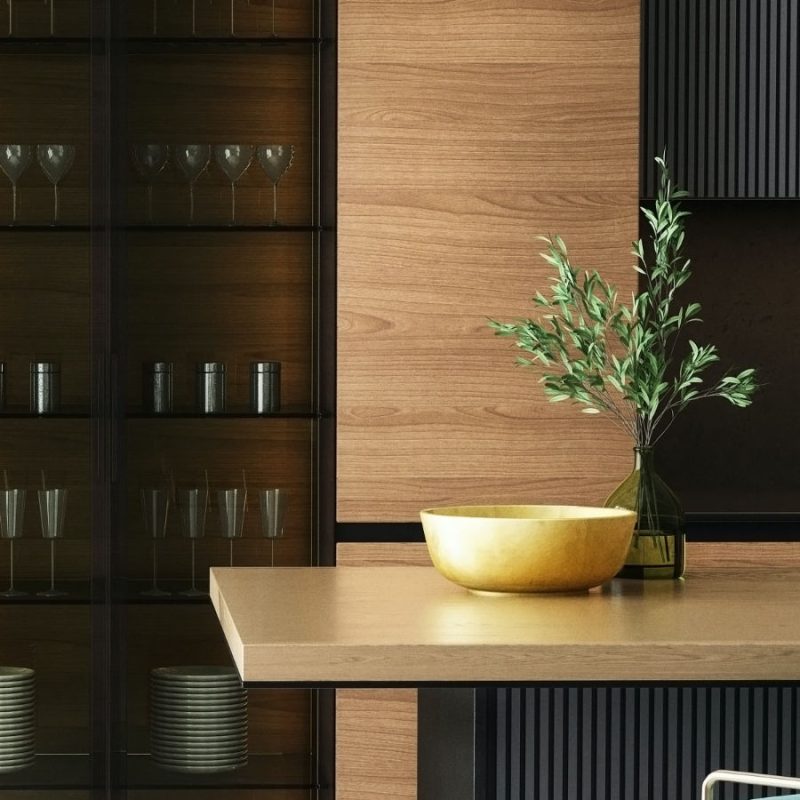
 Wood veneer


