
Definitions of Kontrasti Birch Panel Qualities

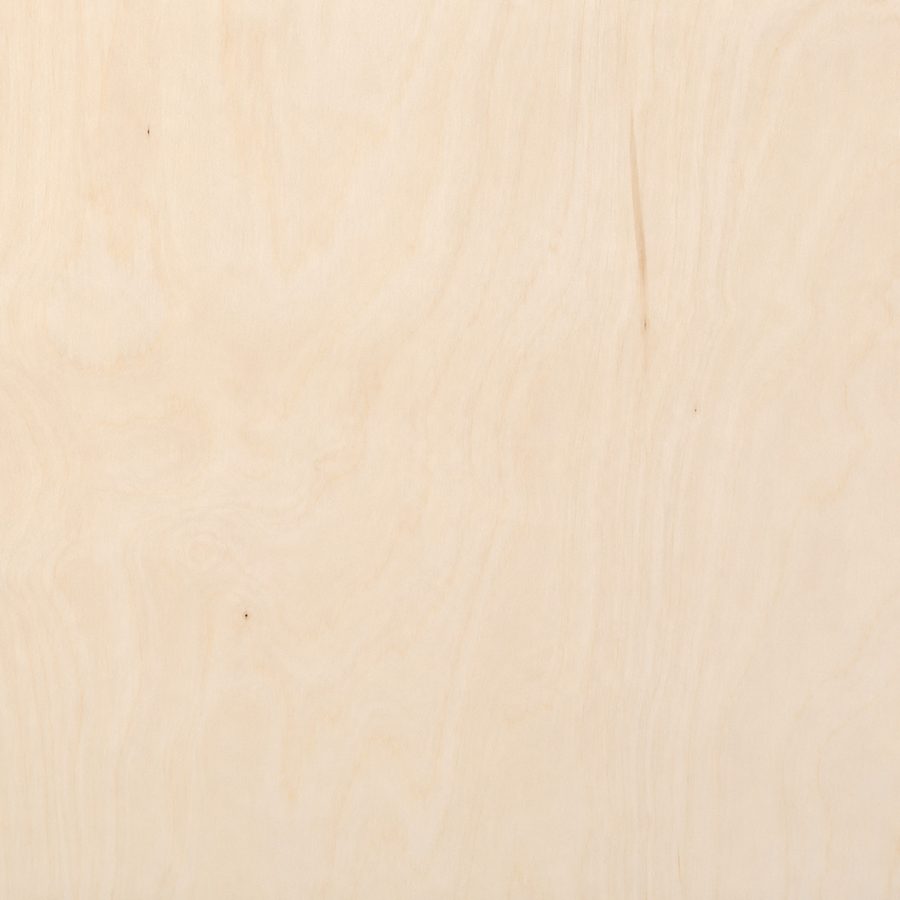
At Kontrasti we want every customer to receive not only good material, but also clear information that prevents doubts or wrong expectations. That is why it matters to explain what our birch panels are like and how the quality grades are defined.
The birch we sell is graded according to the European standard EN 635-2, the same one used across the Baltic supply chain. It is the same language you find on mill documents: A, B and BB are not codes we invented.
A natural material with variations of its own
Birch is natural wood and, as such, it can show knots, grain figure, colour shading or small irregularities.
Even though our panels are carefully selected, no material is completely perfect: these features are part of the nature of the product.
It is worth knowing that even in the highest grades (such as A/B) you may find:
- Small sound knots, light in colour and firmly bound to the grain.
- Colour differences between one sheet and another, or between the two halves of the same sheet: birch lightens and yellows with exposure to light.
- Darker grain or reddish heartwood, typical of Baltic birch.
- Fine lathe checks on the surface, which disappear with light sanding.
- Internal voids not visible to the naked eye, which show up if you shine a light through the panel.
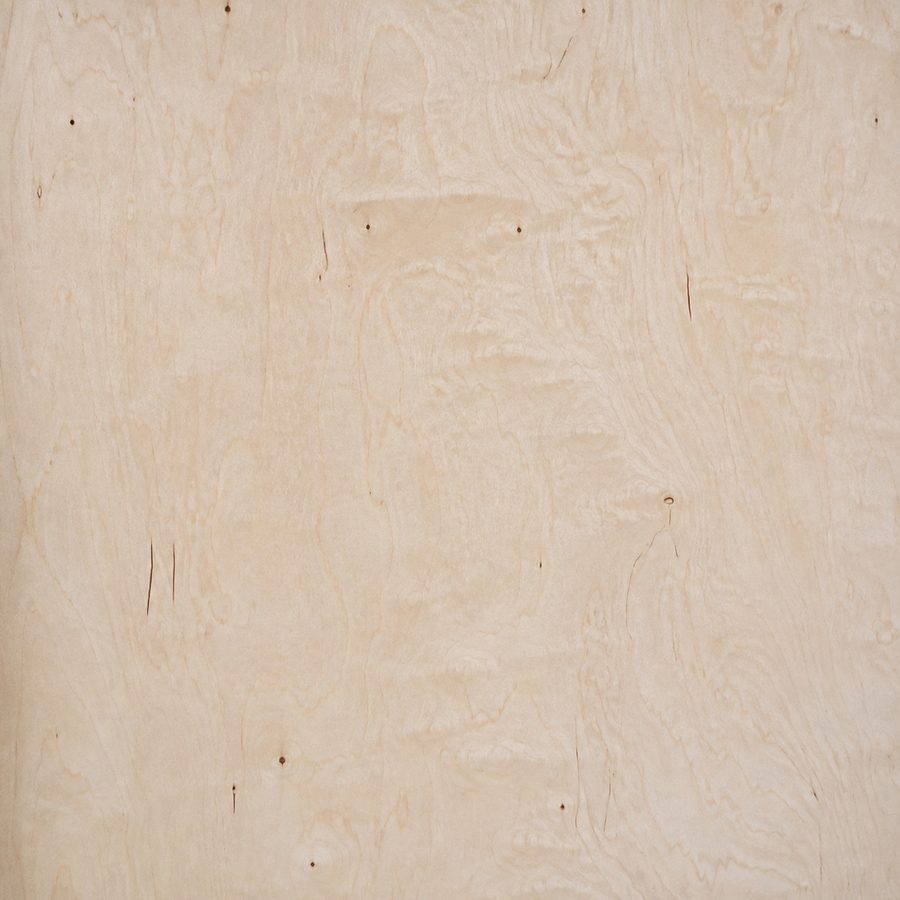
These variations do not mean the panel is faulty: they fall within the standard of the relevant quality grade.
How to read the code
Every panel has two faces and the code describes them in order: the first letter is the better face (the one to leave on show), the second is the back. So B/BB means a B face and a BB back, while BB/BB means both faces are BB.
Kontrasti quality grades
We stock four combinations of birch plywood. They are listed from the most selected to the most economical.
Some photos below are repeated on purpose: a B face is a B face in any combination. Finding the same photo across two grades is the quickest way to see what actually changes.
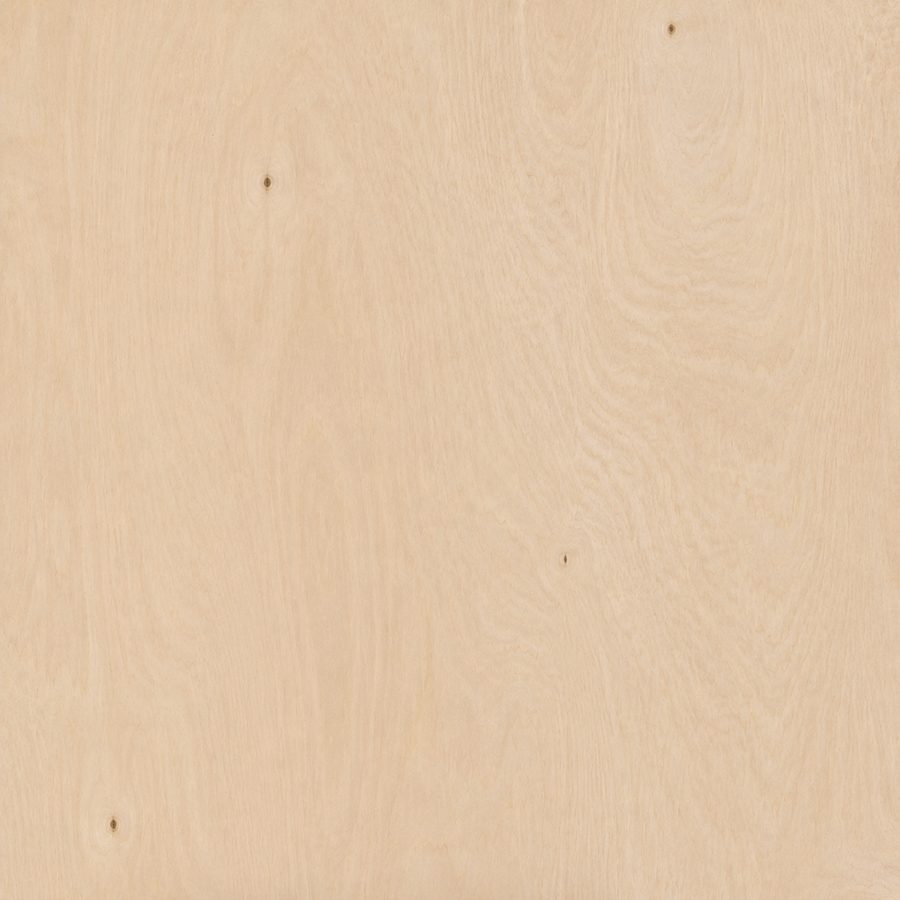
- The A face is clean and even, with no visible surface knots and no patches.
- The B face may have the odd small sound knot and slight colour variation.
- It is the option with the highest cost and the best finish.
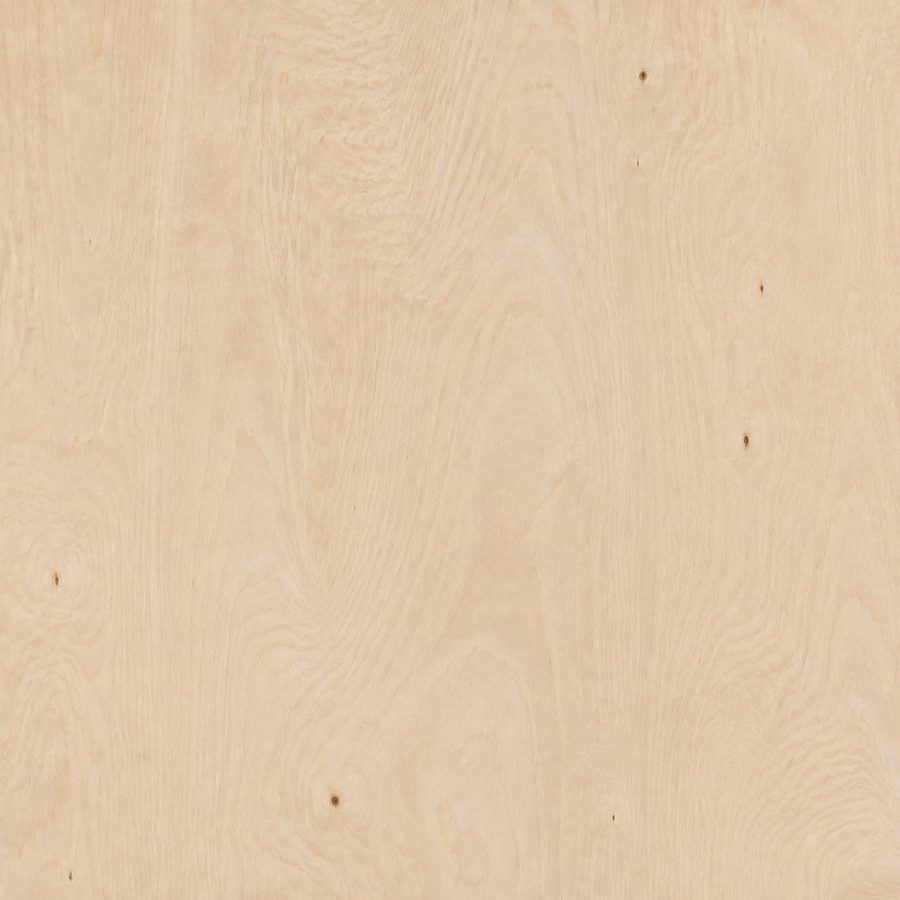
- Both faces are B grade: sound surface, a few well closed pin knots, lively grain.
- No patches and no repairs on either side. That is what separates a B/B from a B/BB.
- There is no front and back: you decide which face goes on show.
- Both faces stay in the same grade, but they are not twins: colour and grain pattern can differ, as you can see above.
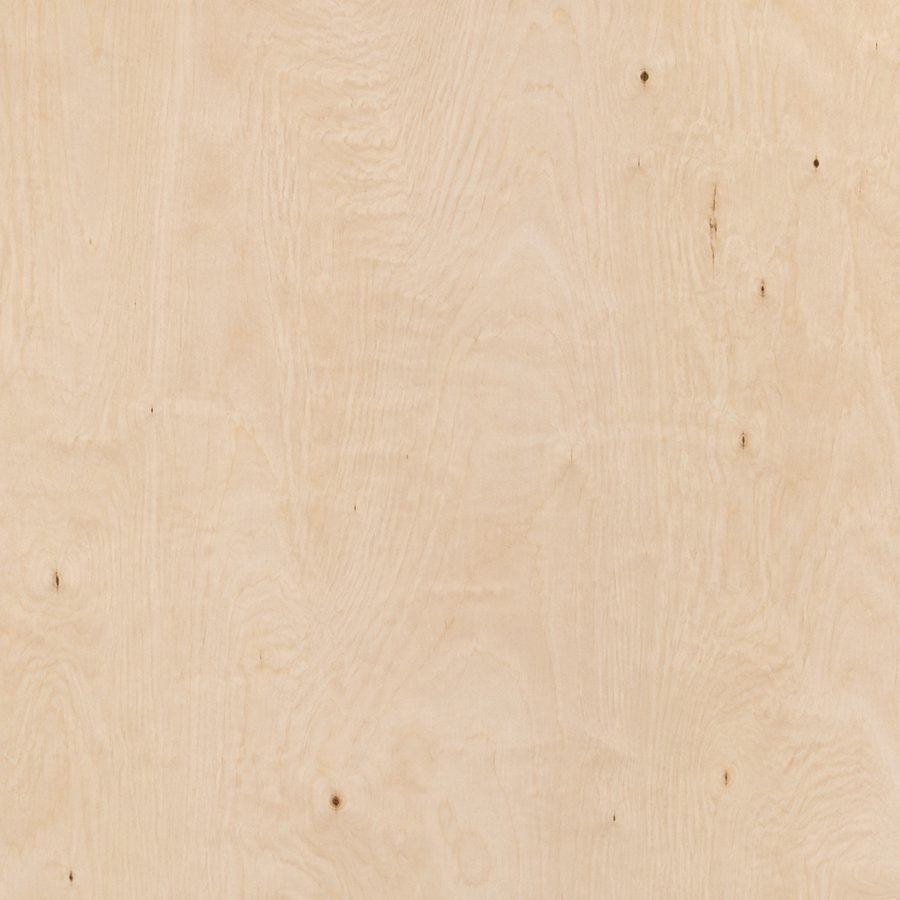
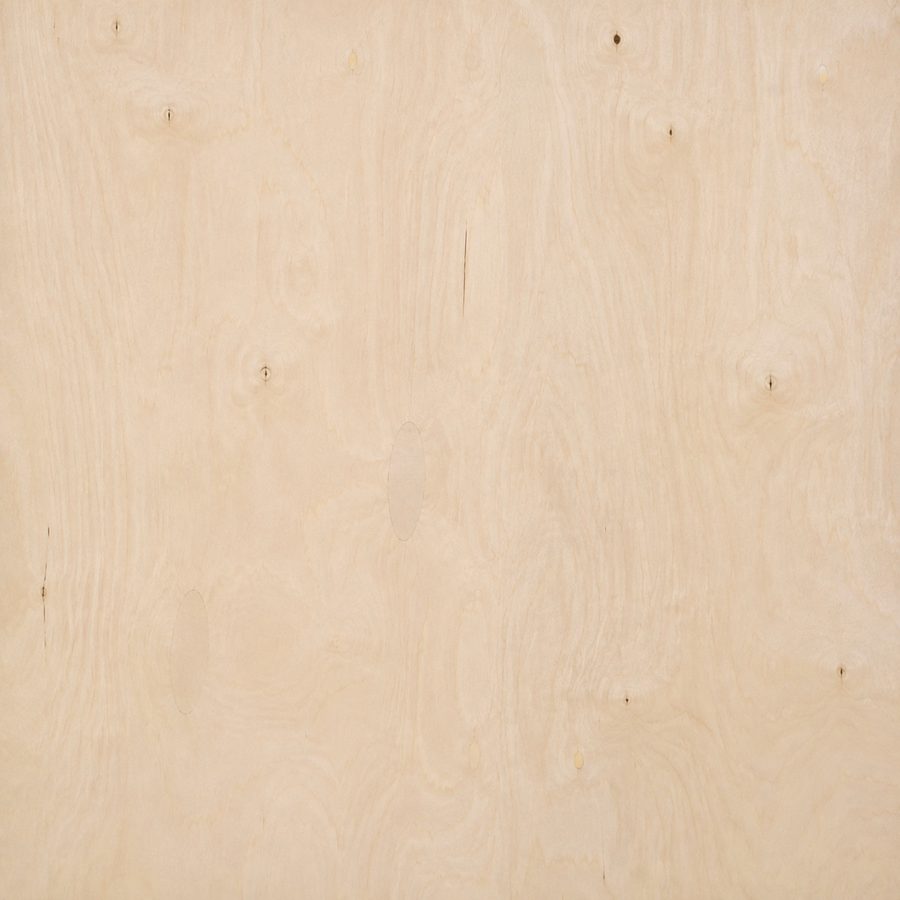
- The B face is generally clean, with small sound knots and possible colour variation.
- The BB face may contain more visible knots and oval wood repairs (the patches).
- It is the most balanced compromise: one good face on show, a sound but worked back.
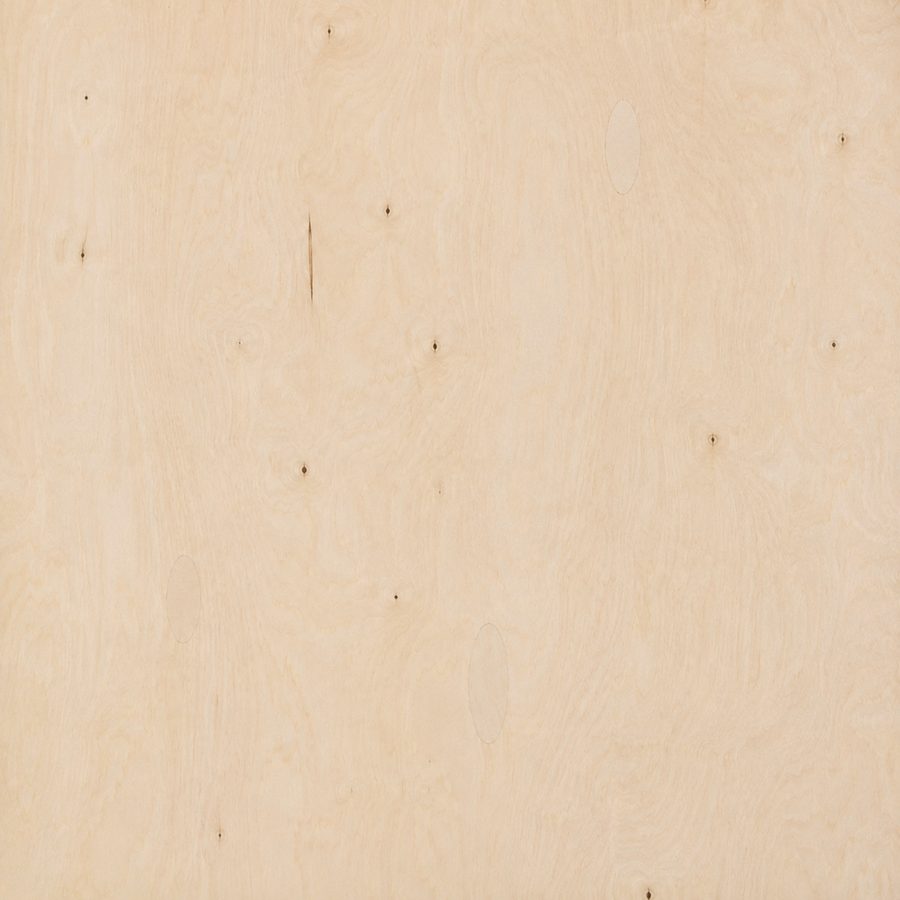
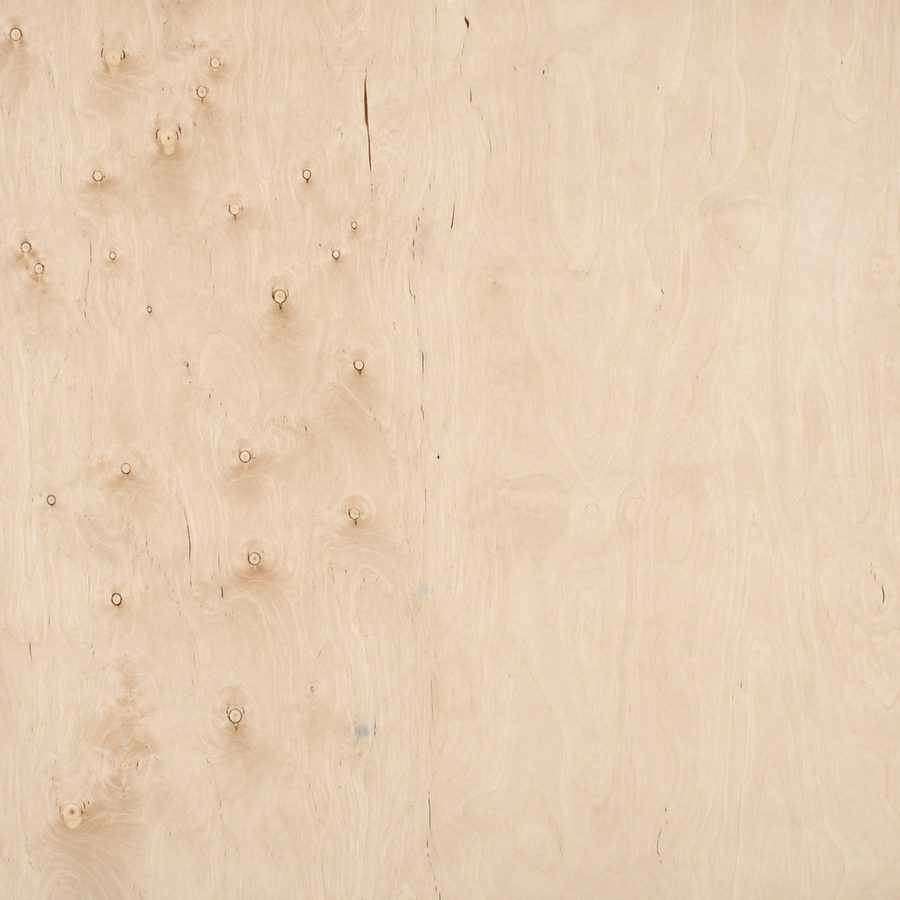
- Both faces may show knots, oval patches and visible repairs.
- Visible fillers or more marked colour differences are possible.
- The panel structure and the way it cuts on the laser do not change: only the look of the surface does.
What to expect inside a pack
The grade describes the selection level of the batch, not an identical result sheet by sheet. Within the same pack it is normal to find some panels slightly cleaner and others slightly more marked: they all stay within the standard of the grade you bought.
If your project needs a precise sheet by sheet selection — for example a run of pieces all in the same tone — write to us before ordering at info@kontrasti.co: we will tell you honestly whether we can guarantee it.
Patches and repairs: what they are
Oval patches (also called football or boat patches) are not a makeshift fix: they are birch wood inserts applied at the mill in place of a loose knot or a void, glued and sanded flush with the surface. They make the panel continuous and stable. They are allowed by the BB grade and, in smaller numbers, you can also find them on the back of a B/BB.
And on the laser?
A patch cuts and engraves like the rest of the panel. It can come out slightly different in tone when engraved, because the grain of the insert is rotated relative to the sheet. If you are engraving a solid fill on a face that stays on show, choose A/B or B/B.
Summary
| Grade | Face | Back | Patches on show | Typical use |
|---|---|---|---|---|
| A/B | Clean, even | Small sound knots | None on the face | Wood on show, premium packaging |
| B/B | Small sound knots | Small sound knots | None | Pieces seen from both sides |
| B/BB | Small sound knots | Knots + patches | Back only | General use, laser cutting |
| BB/BB | Knots + patches | Knots + patches | On both faces | Prototypes, painted or hidden parts |
Graded according to EN 635-2. The photos show real panels: they are representative examples, not a guaranteed sample.
Conclusion
Every Kontrasti birch panel is unique, because it comes from an organic, natural material.
The quality grade defines the level of selection and, as a result, the price. Even within the same grade it is normal to find the variations typical of wood.
Our commitment is to supply a product that matches its classification and to be transparent about it, so that every customer can choose the right material for their project with confidence.
Additional note
Other natural features you may come across are slight waviness, especially in the thinner panels (1.5 and 3 mm). We do everything we can to supply panels as flat as possible, but a slight bow is unavoidable at these thicknesses: if you need absolute flatness, consider MDF.
Looking for poplar grades instead? Read the page on poplar panels.
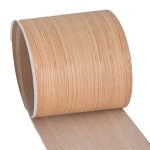 Wood veneer


