
Poplar plywood: Characteristics and uses


What things poplar plywood?
Due to its versatility, poplar plywood is one of the most common choices for making projects and constructions. It is one of the most widely used plywoods in the world and is chosen for its ease of cutting (including laser cutting), flexibility, strength and light weight.
If you are planning to build something, and you are undecided whether to use this type of panel, the following points might help you in your choice.
Let’s go into detail:
- Easy to cut: Poplar plywood has a very soft pulp inside, so it is very easy to cut and work with, in fact it is categorized as a “Soft Wood” that is, a “soft” wood. Obviously Poplar plywood is quite hard and durable, there is no doubt about that. However, birch plywood, for example, can be considered harder and even stronger
- Lightweight: Due to its light weight, it is commonly used for projects that require demanding installations, such as suspended ceilings, backs of cabinets or nightstands (smaller thicknesses are generally used for this kind of work). It is also generally used in the modeling world, especially the 3mm-thick plywood.
- Versatility: Despite having a light weight, poplar plywood is suitable for many kinds of projects and is strong and durable. You will find poplar plywood easy to sand and cut
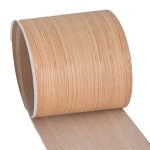
- Appearance: Aesthetically, poplar plywood is clear with a tight and consistent grain.
- Varnish: It is an excellent wood because the varnish adheres very well to its surface.
Sustainability
An important aspect to consider is also its sustainability. In fact, poplar is a tree that grows much faster than other types of trees, think that depending on the geographic area, it takes only 7 years for a poplar tree to be ready to be used as plywood. This aspect has meant that the demand for poplar has grown significantly in the last decade, and for the next few years, demand is expected to be higher than expected.
According to EPF (The European Panel Federation), the production of this plant and its processing contributes to Europe’s long-term strategy for a climate-neutral economy. That is why it is used in buildings that want to have a low-impact climate footprint.
Provenance
The poplar plant has great adaptability to soil and climate conditions. In Europe, the largest growing areas are concentrated in France, Italy, Spain and Hungary, while plywood production is widely practiced in Italy, Spain and Hungary.


 Wood veneer


