
Poplar plywood: the ideal choice for laser cutting


Wood panels are one of the most versatile and widely used materials in the DIY and carpentry. Among the various types of wood, poplar plywood is one of the most widely used high-strength laminated materials.
Poplar plywood is a natural material that has grains and knots that make it unique and original. These imperfections may be present on both faces of the material, but this does not affect its high strength and quality.
Being a natural material, poplar plywood may show some variations in tone and grain from sheet to sheet. In addition, thinner sheets may be subject to warping. However, these small defects can be easily corrected by sanding with a fine-grained sandpaper.
During the laser cutting process, slight discoloration may occur around the area surrounding the cut line, especially on thicker plywood. However, this problem can be easily resolved by sanding.
The cut edge of laser-cut poplar plywood may exhibit a characteristic brown/black discoloration, which becomes increasingly darker as the thickness of the material increases.
Also, being a natural material, knots and other imperfections may be present within the plywood layers. These knots can affect the clarity of the laser cut, sometimes causing the beam to flicker slightly. In some cases, the hardness of a knot prevents the laser from completely cutting through the sheet, and it will be necessary to use a knife to cut through the wood knot. However, this can cause a slightly uneven cut line.
In general, the cutting widths of poplar plywood depend on the thickness of the material. It is important to respect the minimum cutting widths to avoid cutting and finishing problems.
In conclusion, poplar plywood is a natural material of high quality and strength, ideal for carpentry and DIY. Due to its workability, strength, and uniqueness, it is one of the most widely used materials in the industry.
RASTER AND VECTORIAL
Engraving can be done in two ways: raster and vector. The raster engraving method is particularly effective when you want to create shades or gradations of color on a surface. On the other hand, vector engraving is used to create sharp, precise lines on a piece of wood.
Regarding the direction of the grain, our standard practice is to engrave while keeping the grain horizontal, from left to right, in order to ensure maximum clarity. If you prefer engraving vertically to the grain line, please specify this in your request.
It is important to keep in mind that since wood is a natural material, a slight variation in engraving tone may occur from one sheet to the next, despite the fact that the same technical parameters are used to make the engraving. The variation in engraving tone may also vary depending on the difference in wood moisture within the same sheet.
Although you can request deeper carving, it is important to keep in mind that this can cause oils and fumes to be released from the wood, which can stain the surface and create a burned effect around the carving. If you want to maintain a clean result, we suggest sticking to our standard settings for engraving.
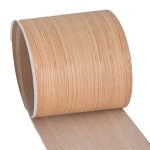 Wood veneer


