
How to store plywood and wood panels for laser cutting

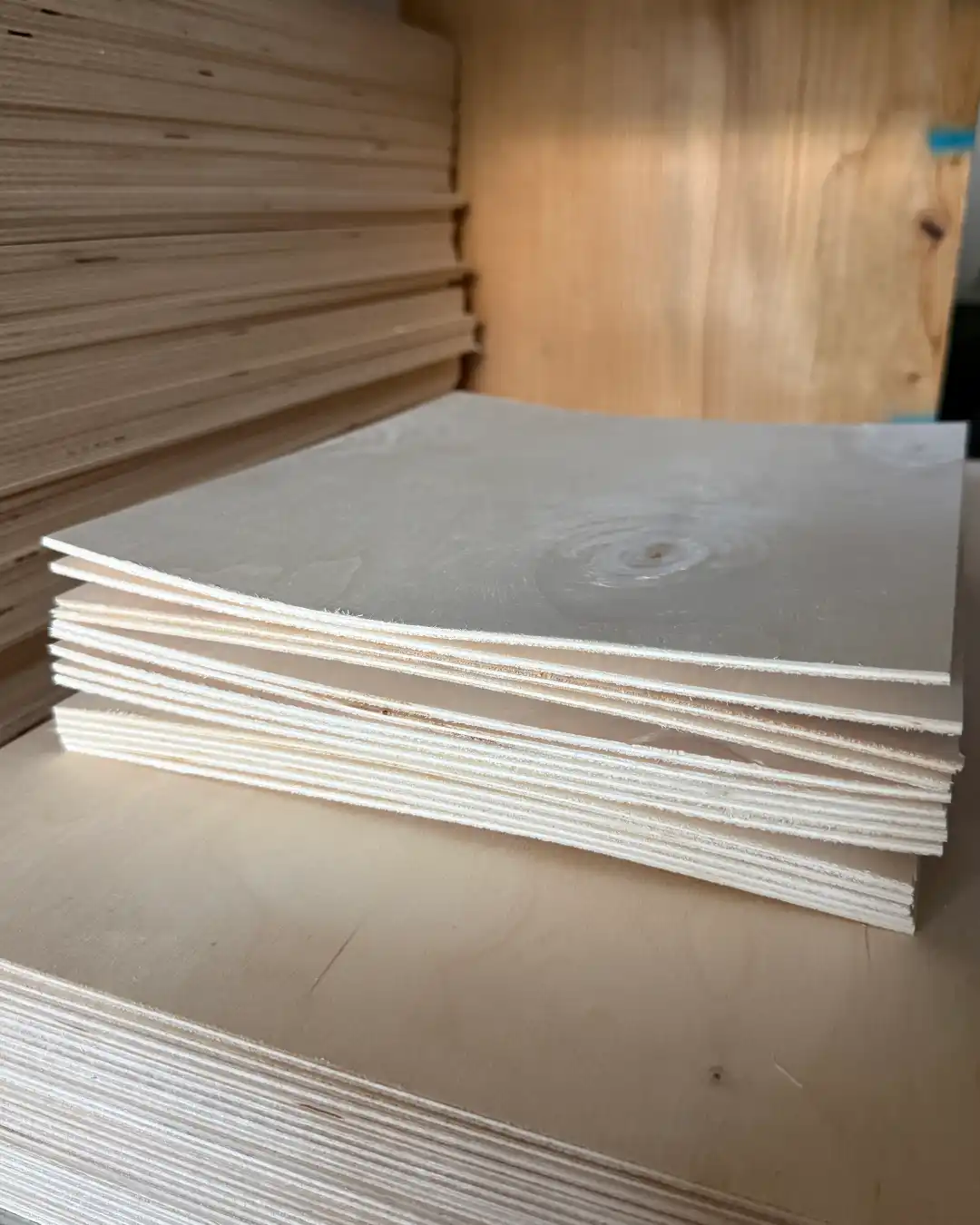
Knowing how to store plywood and other wood panels is the difference between a sheet that is ready for the laser and one that, by the time you come to use it, has curled up at one corner and no longer sits flat on the bed.
The scene is a familiar one: the parcel arrives, the panels look flat, and they end up leaning against a wall “just for a few days”. When you need them, one corner has lifted and the sheet no longer sits flat on the laser bed. It happens above all with thin panels, because wood carries on reacting to its surroundings even after it has been made into plywood: humidity, heat and sudden swings create stresses that throw off its flatness.
The good news is that a few simple precautions cut the risk dramatically. Here is how to store poplar plywood, birch plywood, MDF and veneered sheets without ruining them.
Why a plywood panel warps
Wood absorbs and releases moisture according to the environment it sits in. If one face of the panel reacts faster than the other, or if the plies are exposed to different conditions, stresses build up that lift a corner or bow the sheet.
So it is not only a question of panel quality: it can happen to a well-made material too, particularly after transport with sharp temperature swings, a few days in a hot or damp warehouse, the move from a cold van into a heated workshop, or direct exposure to sunlight or a heat source.
Thin panels, especially 3 and 4 mm, show these changes more readily. That does not mean they are fragile or faulty: they simply have less stiffness to resist the internal stresses.
What to do as soon as the parcel arrives
The first thing to do is check the packaging. If there are dents, punctures or damp patches, photograph it before opening it, then inspect the panels without removing any protective wrapping until their condition is clear.
After transport in very hot, cold or damp conditions, do not put the material straight into the laser. Let it acclimatise for around 48 hours in the room where it will be used, keeping it flat: that is the time the panel needs to settle to the temperature and humidity of the room before cutting. This is the short pause on arrival; recovering a panel that has already bowed takes longer, and we come to that further down.
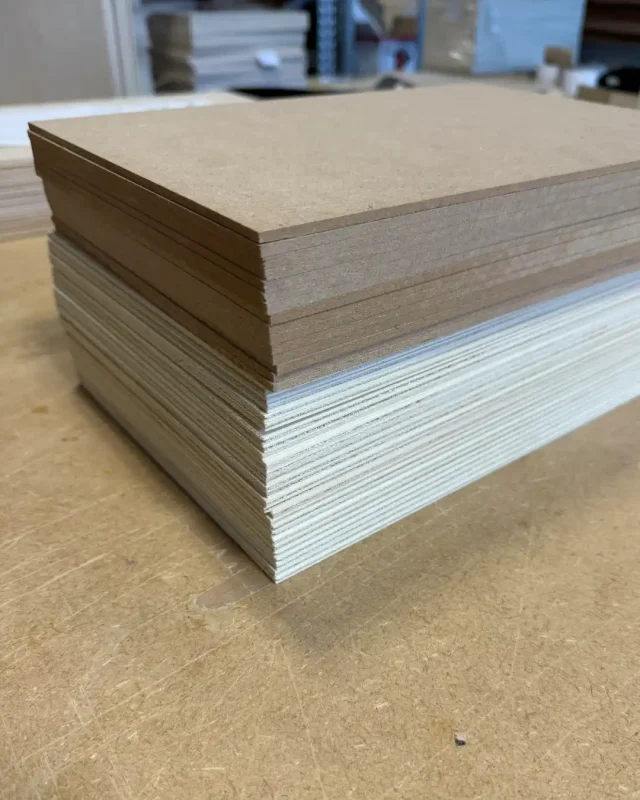
Here we used MDF panels, which are heavier and tend to stay rigid, to act as an even, well-distributed weight on top of the 3 mm poplar plywood.
How to store panels: always flat
The safest way to store panels is to lay them flat on a level, rigid base large enough to support the whole surface. A shelf that stops short of the sheet, a bowed table or two simple supports at either end leave part of the panel unsupported, and over time the wood settles into that shape. If you have mixed sizes, put the larger panels at the bottom and the smaller ones on top: the stack stays stable and every sheet rests on a continuous surface.
Standing panels upright against a wall is convenient, but it is one of the habits that most often makes them warp, especially when the sheets are thin, stay tilted for weeks, or sit next to a cold, damp wall.
Until you need them, it is best to leave the panels in their original packaging: the cardboard slows down sudden changes in humidity. What you should not do is seal already damp material in fresh plastic, because you risk trapping the moisture inside; if the packaging arrived wet or damaged, open it, check the sheets and let them stabilise in a dry room.
For long-term storage, you can lay a clean, rigid panel of the same size on top of the stack, with a light, even weight. There is no need to crush the wood, only to keep it in place: avoid small weights concentrated on one spot, which leave marks or create fresh distortion.
Where to store plywood, MDF and veneered panels
The best place is a dry indoor space with stable conditions. You do not need to turn your workshop into a climate chamber: as a guide, aim for 45–60% relative humidity and a temperature of around 18–24 °C, avoiding constant swings. A simple hygrometer costing a few euros tells you straight away whether the room is too damp.
It is better not to store panels:
- directly on the floor, or in damp cellars, garages and outbuildings;
- against cold walls or near external doors that are opened frequently;
- under a sunlit window or close to stoves, radiators and hot air vents;
- anywhere they could be reached by splashes of water or condensation.
Every material has its own sensitivities. Thin poplar plywood and birch plywood are the most reactive to swings. MDF is normally more stable than plywood, but it swells if it absorbs water, especially along the edges. Veneered panels need the same care, because the substrate and the thin layer of natural wood can react differently to changes in the environment.
How to flatten a panel that has already warped
A slightly bowed panel is not necessarily scrap. Before you write it off, try flattening it: leave it flat for a few days in a dry room, under a rigid surface and an even weight. Recovery is not always complete, but many mild distortions ease off as the material stabilises.
If the sheet is going to be cut into small pieces, the tension eases as it is divided up: the resulting pieces are often flatter than the whole sheet. While cutting, you can hold the material down against the bed with whatever suits your machine — magnets, honeycomb bed clamps or tape outside the working area — checking that no clamp can be struck by the laser head and that the focus stays correct.
If, on the other hand, the curve is pronounced, prevents safe focusing, or the material is wet, swollen or delaminated, it is better not to work it. If you find problems on delivery, photograph the panels and packaging straight away and contact support before altering them.
Quick checklist for storing Kontrasti panels
- Keep panels lying flat on a rigid, clean base, raised off the floor — never upright against a wall.
- Leave them in their original packaging until you use them.
- Store poplar, birch, MDF and veneered panels in a dry indoor room (45–60% humidity), away from sunlight, cold walls and heat sources.
- Do not split sheets across different rooms, and do not expose just one side to heat.
- After sharp swings in transport, let them acclimatise for around 48 hours before working them.
- If you use a weight, spread it with a rigid panel, never concentrated on one spot.
- Check for and photograph any problems immediately on delivery.
Wood is still a natural material
A slight variation in colour, grain or flatness is part of the nature of wood, and plywood too — even though it is made of several bonded plies — carries on reacting to its surroundings. Storing it properly will not eliminate all movement, but it sharply reduces the risk and keeps panels ready for laser cutting and engraving for longer.
You will find every size and laser-grade quality in our selection of laser cutting materials.
 Wood veneer


