
Difference between CO2 Laser and Diode Laser: Complete Guide 2025

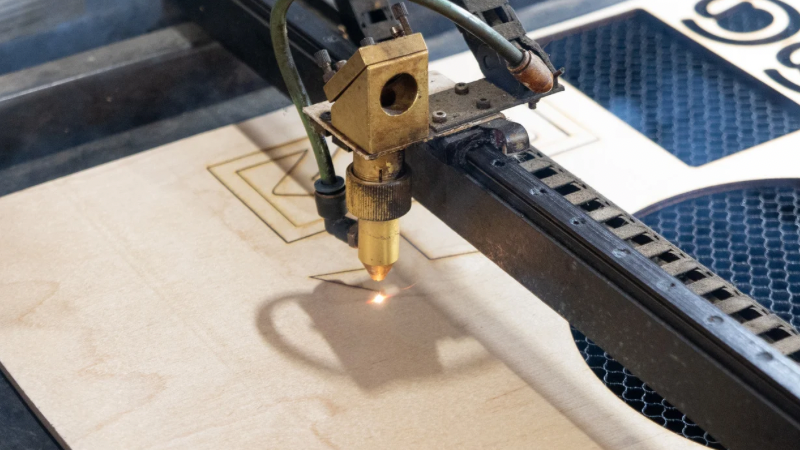
If you’re considering purchasing a laser to engrave or cut materials like wood, acrylic, or metal, you’ve probably wondered what the difference is between CO2 lasers and diode lasers. Both systems are very popular among artisans, makers, and small businesses, but they offer very different performance, costs, and applications.
1. What is a CO2 laser and a diode laser
The CO2 laser uses a gas-filled tube (carbon dioxide) that generates a high-power infrared beam.
The diode laser uses a more compact semiconductor light source.
The first is more powerful and versatile, suitable for professional work; the second is economical and ideal for makers and hobbyists.
2. Compatible materials
The diode laser works well on wood, cardboard, leather, and anodized metals. It can only cut black acrylic, as blue light does not pass through transparent or light materials. Other types of acrylic tend to melt or smear.
The CO2 laser, on the other hand, cuts and engraves virtually all non-metallic materials: transparent and colored acrylic, wood, leather, fabrics, and paper. It’s perfect for precision work and offers glossy edges on acrylic.
Materials Compatible with the Diode Laser
The diode laser uses blue light with a wavelength between 450 and 455 nm, very efficient on dark or opaque surfaces, but not very effective on transparent or reflective materials.
Materials it can cut or engrave with good results:
- ✅ Wood and plywood: perfect for decorative cuts, engravings on cutting boards, logos, signs, or small craft items.
- ✅ Cardboard, paper, and fabrics: good cutting and engraving results.
- ✅ Leather and natural leather: excellent for personalized engravings.
- ✅ Anodized or painted metals: can engrave surfaces like anodized aluminum or painted steel, creating visible contrasts.
- ✅ Marble and glass (with masking): possible to make light surface engravings, avoiding damage to the optical lens.
Materials that the diode laser cannot cut:
- ❌ Raw or shiny metals: the energy is not sufficient to cut them; it can only mark or darken the surface.
- ❌ Clear or transparent acrylics: the blue beam passes through the material without heating it, so no cutting occurs.
- ❌ White, blue, or opaline acrylics: tend to reflect light and melt instead of cutting.
- ⚠️ The only cuttable acrylic with a diode is black. All other types melt or smear, without achieving a clean edge.
- ❌ PVC or materials containing chlorine: prohibited for both types of lasers, they release toxic and corrosive fumes.
Practical tip:
If you mainly work with wood or organic materials, the diode is a great choice.
It’s also suitable for those who want to customize anodized metal surfaces (mugs, plaques, gadgets) or do economical engraving tests.
3. Practical tips and maintenance
• Avoid always working at 100% power: it reduces the lifespan of the tube or diode.
• Regularly clean lenses and mirrors with microfiber cloths and isopropyl alcohol.
• Ensure effective ventilation: wood and acrylic fumes must be expelled.
• Frequently check the focus: a distance error compromises the cut.
• Use LightBurn to best manage the work, compatible with almost all lasers.
• Wear appropriate protective glasses and work in ventilated environments.
| Material | Diode Laser | CO2 Laser |
|---|---|---|
| Wood / Plywood | ✅ Cutting and engraving | ✅ Fast cutting and engraving |
| Leather / Hide | ✅ Engraving | ✅ Cutting and engraving |
| Paper / Cardboard | ✅ | ✅ |
| Black Acrylic | ✅ Cutting | ✅ Cutting |
| Transparent / Colored Acrylic | ❌ | ✅ Cutting and glossy edges |
| Glass / Marble | ⚠️ Only engraving | ⚠️ Only engraving |
| Anodized Metal | ✅ Surface engraving | ⚠️ Only with marking spray |
| Raw Metal | ❌ | ❌ |
| Fabrics / Felt | ✅ | ✅ |
| PVC / Vinyl | ❌ | ❌ |
5. Conclusion
The diode laser is perfect for those who mainly work with wood or organic materials, while the CO2 laser is the ideal choice for workshops that need power and versatility on acrylics and plastics. Both can offer excellent results if properly maintained.
FAQ
Q: Can I cut transparent acrylic with a diode laser?
A: No, only black acrylic. Other colors do not react to the blue beam’s wavelength.
Q: How long does a CO2 laser last compared to a diode?
A: The CO2 tube lasts 2,000–5,000 hours, a diode module can exceed 20,000 hours.
 Wood veneer


